

Monday, 5 December 2011
Pod casts on Psychology from BBC
We have to thank the Swiss developmental psychologist, Jean Piaget for 'learning by play' applied to the classroom - a personal discovery which he believed to be far more effective than sitting in rows learning by rote. His idea was that children don't just store facts, they process them. As they interact with things around them every day they build a model of the world in their minds, so in the classroom they need the chance to experiment.
There's no disputing the importance of Piaget's educational legacy, but critics have questioned the methodology of much of his experimental work and have concluded that some of his experiments were basically flawed. One such is the Three Mountains - from this experiment Piaget concluded that, because young children could not imagine what someone on the other side of the mountain model from the side they were standing could see, they were incapable of empathy. Subsequent experiments allowing children to imagine different social, rather than spatial, situations have had very different results. Claudia Hammond asks how far we should rely on Piaget's findings today.
Inside the Psychologist’s Studio with Mahzarin R. Banaji and Rebecca Saxe - Association for Psychological Science
Tuesday, 29 November 2011
What we learn before we're born
Annie Murphy Paul: What we learn before we're born
Monday, 14 November 2011
Empathy may be in your genes -- and on your face
We all have about three billion letters in our genetic code, but people who have a two copies of the "G" gene in their DNA seem to be more empathetic and are more trustworthy, compassionate and cooperative – and it can be detected in about 20 seconds, says Alesandr Kogan, a social psychologist at the University of Toronto at Missasawga. People who don't have the double G variation are less likely to be empathetic.
A variation in the oxytocin receptor gene can be identified by non-verbal behaviors in people who smile more, offer head nods and eye contact. The findings were published in today’s early online edition published in the journal, Proceedings of the National Academy Sciences in the United States of America (PNAS). Oxytocin is sometimes called the “love hormone” and is associated with bonding, sexual arousal and, of course, empathy.
Kogan and his team made this determination when they asked 116 University of Toronto students to watch a short, silent video clip of people with varying oxytocin receptors genes listening to their romantic partners tell them about a time of suffering. The ethnically diverse students -- average age 19 -- were asked to identify which people were more trustworthy, compassionate and cooperative.
After only 20 seconds, the people who watched the video could easily point out which listening partners had the double G genotype and were more empathetic because of their caring body language compared to people who did have this particular empathy gene.
Thursday, 13 October 2011
Monday, 10 October 2011
Child Psychology: What do babies think?Alison Gopnik speaks on TED
"Babies and young children are like the R&D division of the human species," says psychologist Alison Gopnik. Her research explores the sophisticated intelligence-gathering and decision-making that babies are really doing when they play.
Sunday, 9 October 2011
Testing the white doll and black doll
The video shows how the social and family environment in which children are having an impact on their image of themselves ...Sometimes even before they entered adolescence, children have animage of them that leaves them little chance to assert themselves in life. A video reflection!
We are all human at the end,We can never progress as a human race if we continue to oppress various skin colors. That's why we're so screwed up as a people, people do not realize that we are all one and the same, the illusion of race is just that.
The only reason these kids would have loved white it is because from an early age they are well aware that because of their skin color they do not have the same chance in society
Finally, it is found that the questions put to children in these experiments lead to such conclusions.
"Which one of these dolls is bad?" : This question, the questioner implies that there is a bad doll, the child has already chosen his favorite doll has an answer.
A question like "Is there an evil doll?" or better yet "What do you think of this doll?" would have been more appropriate and workable
Friday, 7 October 2011
User:Balqis Thaahaveettil - WikiEducator
User:Balqis Thaahaveettil - WikiEducator
[▲] Balqis Thaahaveettil Balqis Thaahaveettil | |||||||
|---|---|---|---|---|---|---|---|
| Website: | http://singnspeakenglish.blogspot.com/ | ||||||
| Blog: | http://njaanam1.wordpress.com/http://www.wiziq.com/balqis815275http://scienceedify.blogspot.com | ||||||
| Employer: | Markaz Training College | ||||||
| Occupation: | Lecture in Educational Psychology and Life Sciences Online Tutor for ESL and Science | ||||||
| Other roles: | Online Counsellor ,Teacher trainer ,Painter and Writer | ||||||
| Nationality: | Indian | ||||||
| Languages: | English ,Hindi and Malayalam | ||||||
| Country: | India | ||||||
|
| |||||||


About me
This is Balqis Thaahaveettil from India.I am a college certified lecturer and have passed the national eligibility test to teach at colleges and secondary level.I have worked as a teacher educator /trainer at teacher training college,giving lectures in educational psychology and I can indeed help you to start learning difficult subjects through simplified ways.I can teach learning theories as well.Iam also interested in teaching school children science and math subjects.I can teach graduate students life sciences,basics of Educational philosophy and ofcourse English too in a more interactive,learner centered way assuring you to overcome and tackle with problems of your varied learning styles .I'm a dedicated tutor online for spoken english and free classes are given from wiziq.com[[1]] website.
Wednesday, 10 August 2011
Monday, 1 August 2011
Subway Personality: The MBTI Map
Subway Personality: The MBTI Map
by Maria Popova

7 Must-Read Books on Music, Emotion & the Brain
7 Must-Read Books on Music, Emotion & the Brain
by Maria Popova Last year, Horizon’s fascinating documentary on how music works was one of our most-liked pickings of 2010. But perhaps even more fascinating than the subject of how music works is the question of why it makes us feel the way it does. Today, we try to answer it with seven essential books that bridge music, emotion and cognition, peeling away at that tender intersection of where your brain ends and your soul begins.
 MUSICOPHILIA
 We love the work of neuroscientist and prolific author Oliver Sacks, whose latest book, The Mind’s Eye, was one of our favorite brain books last year. But some of his most compelling work has to do with the neuropscyhology of how music can transform our cognition, our behavior, and our very selves. InMusicophilia: Tales of Music and the Brain, Revised and Expanded Edition, Sacks explores the most extreme of these transformations and how simple harmonies can profoundly change lives. From clinical studies to examples from pop culture — did you know that Ray Charles believed he was “born with the music inside [him]“? — Sacks delivers a fascinating yet remarkably readable tale that tells the story, our story, of humanity as a truly “musical species.”
 THIS IS YOUR BRAIN ON MUSIC
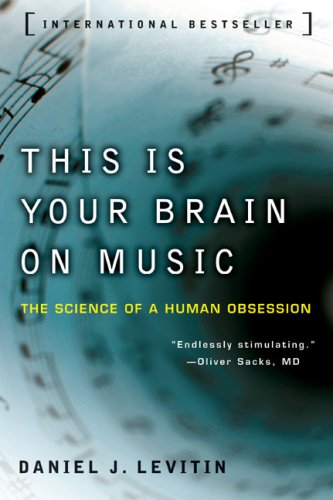 Why music makes us feel the way it does is on par with questions about the nature of divinity or the origin of love. In This Is Your Brain on Music: The Science of a Human Obsession, Daniel Levitin sets out to answer it — an ambitious task he tackles through a range of lenses, from a digestible explanation of key technical constructs like scale, tone and timbre to compelling cross-disciplinary reflections spanning neurobiology, philosophy, cognitive psychology, memory theory, behavioral science, Gestalt psychology and more. He illuminates diverse subjects like what accounts for the diversity of musical tastes and what makes a music expert, framing music processing as a fundamental cognitive function embedded in human nature. Most impressively, however, Levitin manages to do this while preserving the without subtracting from the intuitive, intangible magic of powerful music, dissecting its elements with the rigor of a researcher while preserving its magnetism with the tenderness of a music lover.
 MUSIC, LANGUAGE, AND THE BRAIN
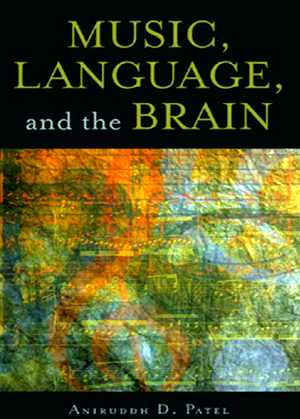 As if to drive a stake through the heart of Levitin and Pinker’s debate,Music, Language, and the Brain by Aniruddh Patel — both a musician himself and one of the greatest living neuroscientists — dissects the unique neuropsychological relationship between two of the most unique hallmarks of our species. Rigorously researched and absorbingly narrated, the book traces the origins of humanity’s understanding of this correlation, dating as far back as the philosophical debates of Ancient Greece, and challenges the scientific community’s longstanding assumption that music and language evolved independently of one another. It’s the kind of read that will leave you at once astounded by how much you’ve learned about its subject and keenly aware of how little you — how little we, as a culture — know about it.
 LISTEN TO THIS
 In 2008, New Yorker music critic Alex Ross published The Rest Is Noise: Listening to the Twentieth Century — a remarkable historical and social context for contemporary music, which went on to become one of the most influential music history books ever written. Last fall, Ross released his highly anticipated sequel: Listen to This — an outstanding effort to explain and understand the world through its musical proclivities, from European opera to Chinese classical music to Bjork. Though the book, an anthology of the author’s most acclaimed essays with a deeper focus on classical music, is further removed from neuroscience than the rest on this list, Ross’s astute observations on the emotional and social experience of music make it an indispensable addition nonetheless.
 MUSIC, THE BRAIN AND ECSTASY
 If the human voice is the greatest instrument, as the widespread music teacher preaching goes, then the brain is the greatest composer. Every time we perform, compose or merely listen to music, the brain plays high-level Tetris with a range of devices, harmonies and patterns, creating emotional meaning out of the elements of sound and often extracting intense pleasure. In Music, The Brain, And Ecstasy: How Music Captures Our Imagination, composer Robert Jourdain examines music’s unusual emotive power through little-known facts and physiological phenomena and historical anecdotes. Perhaps most fascinatingly, he pins down the origin of pleasure in music as a consequence of a series of tonal deviations that create a conflict in the brain, resolved with a return to the tonal center, which gives us a sensation of bliss. This sequence of conflict and resolution, he explains, can come from the four key elements of music: rhythm, melody. phrase, and harmony. “Ecstasy” is the result of a resolution that comes once a conflict has reached the limit of the listener’s comprehension ability in tonal space-time.
 THE TAO OF MUSIC
 Traditional self-help books are the pesky cold sore swapped between the lips of legitimate literature and serious psychology. And then there are the books that actually help the self in smart, non-pedantic ways involving no worksheets or mirror nodding. That’s exactly what John Ortiz does in The Tao of Music: Sound Psychology, blending the extraordinary power of music with the principles of Taoist philosophy to deliver an unusual yet captivating proposition: You can enlist your music library in improving your performance and state of mind across everyday challenges like keeping anger at bay, breaking the spell of procrastination, learning to be fully present with romantic relationships, and mastering the art of true relaxation. Through cognitive-behavioral exercises, meditative techniques and melodic visualizations, Ortiz offers a powerful music-driven toolkit for navigating life’s obstacles, and even curates specific “musical menus” of songs and melodies that target specific emotional states and psychological dispositions.
 MUSIC AND THE MIND
 Nearly two decades after its original publication, Anthony Storr’s Music and the Mind remains an essential and timeless prism for looking at one of humanity’s greatest treasures. From the biological basis of cognition to a thoughtful analysis of the views held by history’s greatest philosophers to the evolution of the Western tonal system, Storr addresses some of the most fundamental questions about music, like why a minor scale always sounds sad and a major scale happy, and offers an evidence-backed yet comfortingly human grand theory for the very purpose of music: Peace, resolution and serenity of spirit.
Isaac Asimov on Science and Creativity in Education
Isaac Asimov on Science and Creativity in Education
by Maria PopovaWe’re deeply fascinated by how the past envisioned the future. Previously:retrofuturistic artwork, Orson Welles’ Future Shock techno-paranoia, a vision for the iPad 23 years before the iPad, Marshall McLuhan’s“global village” concept, and a living timecapsule of futurism by cultural luminaries.Once we have computer outlets in every home, each of them hooked up to enormous libraries where anyone can ask any question and be given answers, be given reference materials, be something you’re interested in knowing, from an early age, however silly it might seem to someone else… that’s what YOU are interested in, and you can ask, and you can find out, and you can do it in your own home, at your own speed, in your own direction, in your own time… Then, everyone would enjoy learning. Nowadays, what people call learning is forced on you, and everyone is forced to learn the same thing on the same day at the same speed in class, and everyone is different.” ~ Isaac Asimov
Moyers: But what about the argument that machines, computers, dehumanize learning?”
Asimov: As a matter of fact, it’s just the reverse. It seems to me that, through this machine, for the first time we’ll be able to have a one-to-one relationship between information source and information consumer.”
Science does not purvey absolute truth, science is a mechanism. It’s a way of trying to improve your knowledge of nature, it’s a system for testing your thoughts against the universe and seeing whether they match.” ~ Isaac Asimov
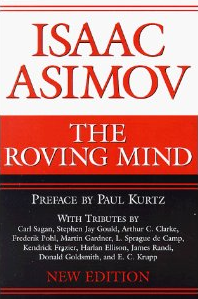 For more of Asimov’s cunning insight on the role of science and creativity in education, we highly recommendThe Roving Mind — a compelling collection of 62 edifying essays on everything from creationism to censorship to the philosophy of science, in which Asimov predicts with astounding accuracy not only the technological developments of the future but also the complex public debates they have sparked, from cloning to stem-cell research.
Why We Love: 5 Books on the Psychology of Love
Why We Love: 5 Books on the Psychology of Love
by Maria Popova It’s often said that every song, every poem, every novel, every painting ever created is in some way “about” love. What this really means is that love is a central theme, an underlying preoccupation, in humanity’s greatest works. But what exactly islove? How does its mechanism spur such poeticism, and how does it lodge itself in our minds, hearts and souls so completely, so stubbornly, as to permeate every aspect of the human imagination? Today, we turn to 5 essential books that are “about” love in a different way — they turn an inquisitive lens towards this grand phenomenon and try to understand where it comes from, how it works, and what it means for the human condition.
 ESSAYS IN LOVE
 No superlative is an exaggeration ofAlain de Botton‘s humble brilliance spanning everything from philosophy to architecture. Essays in Love is precisely the kind of thoughtful, poetic, highly intelligent tome De Botton has grown famous for. Part novel, part philosophical inquiry into the origin and machinery of romantic love, the book follows the story of a love affair, tracing each stage — from the initial dopamine-driven lovesickness to the despair of love’s demise — through a beautiful blend of intellectual analysis and deeply human felt emotion. In De Botton’s classic style of networked knowledge, the narrative is sprinkled with references to and quotes from the major Western philosophers, yet equally reflective of his signature style of absorbing, highly readable narrative.
Every fall into love involves [to adapt Oscar Wilde] the triumph of hope over self-knowledge. We fall in love hoping that we will not find in the other what we know is in ourselves – all the cowardice, weakness, laziness, dishonesty, compromise and brute stupidity. We throw a cordon of love around the chosen one, and decide that everything that lies within it will somehow be free of our faults and hence lovable. We locate inside another a perfection that eludes us within ourselves, and through union with the beloved, hope somehow to maintain [against evidence of all self-knowledge] a precarious faith in the species.”
 WHY WE LOVE
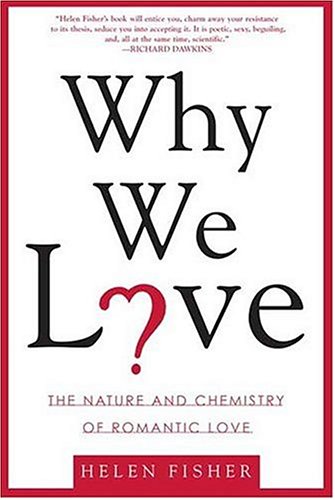 You might recall biological anthropologist Helen Fisher‘s work from this fascinatingdiscussion of how antidepressants impact the experience of romantic love. That’s just one of a myriad equally fascinating facets of love Fisher dissects in Why We Love: The Nature and Chemistry of Romantic Love — a journey into the mind’s blend of neurochemistry and storytelling, the hormones and neurotransmitters that make us feel certain emotions, and the stories we choose to tell ourselves about those emotions. Fisher outlines the three key components of love, each involving different but connected brain systems — lust, driven by androgens and estrogens, the craving for sexual gratification; attraction, characterized by high dopamine and norepinephrine levels and low serotonin, euphoria when things are going well and terrible mood swings when they’re not, focused attention, obsessive thinking, and intense craving for the individual; and attachment, commandeered by the hormones oxytocin and vasopressin and associated with the sense of calm, peace, and stability one feels with a long-term partner — and brings a researcher’s lens to fundamental questions about passion and obsession, joy and jealousy, monogamy and divorce.
 THE PSYCHOLOGY OF LOVE
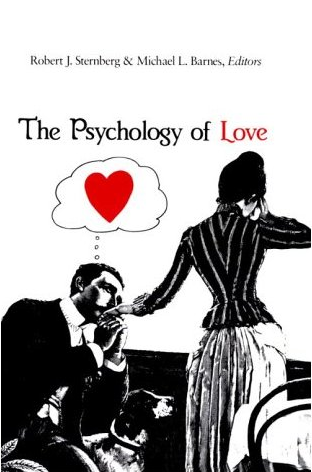 Originally written in 1988, The Psychology of Love is an anthology of 16 academic, though highly readable, papers dissecting various aspects of love. The collection is divided into five parts, each focusing on a specific facet of understanding love, from global theories that explain the phenomenon, to the psychology of relationship maintenance, to a critical overview of the field of love research.
For many people, love is the most important thing in their lives. Without it, they feel as though their lives are incomplete. But what is “it”? This question has been addressed by poets, novelists, philosophers, theologians, and, of course, psychologists, among others. This book presents the attempts of contemporary psychologists whose field of expertise is the study of love and close relationships to figure out just what love is.”
 FALLING IN LOVE
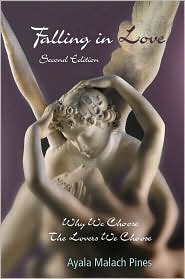 Have you ever encountered a couple with disproportionately unequal attraction levels, only to find yourself thinking that the less-attractive person “must be really funny” or “is probably some sort of genius” or some other rational explanation of the seemingly mismatched pairing? In Falling in Love: Why We Choose the Lovers We Choose, social psychologist and researcher Ayala Malach Pines tackles this and many other mysteries of the psychology of mate selection through a masterfully woven mesh of social and clinical approaches to understanding romance. The book extracts its key insights from three case studies: An interview-based study of 100 romantic relationships, a cross-cultural, data-driven juxtaposition of American and Israeli accounts of falling in love, and another interview series of 100 couples examining their reasons for falling in love in the context of turmoil later in the relationship.
Is love really blind? A large body of theory and research, as well as my own research and many years of clinical work, have convinced me that the answer to this question is a firm no!”
 A GENERAL THEORY OF LOVE
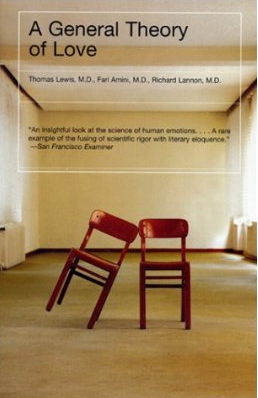 Besides having a cover the epitome of design’s capacity for communicating powerful concepts with brilliant visual simplicity, A General Theory of Love by psychiatrists Thomas Lewis,Fari Amini, and Richard Lannon is also a first-of-its-kind synthesis of research and poeticism, bringing a social science eye to the natural history of the grandest emotion.
Since the dawn of our species, human beings in every time and place have contended with an unruly emotional core that behaves in unpredicted and confusing ways. Science has been unable to help them. The Western world’s first physician, Hippocrates, proposed in 450 B.C. that emotions emanate from the brain. He was right — but for the next twenty-five hundred years, medicine could offer nothing further about the details of emotional life. Matters of the heart were matters only for the arts — literature, song, poetry, painting, sculpture, dance. Until now.”
The Book of Symbols: Carl Jung’s Catalog of the Unconscious
by Kirstin Butler A primary method for making sense of the world is by interpreting its symbols. We decode meaning through images and, often without realizing, are swayed by the power of their attendant associations. A central proponent of this theory, iconic Swiss psychoanalyst Carl Gustaf Jung, made an academic case for it in the now-classic Man and His Symbols, and a much more personal case in The Red Book.


 Kirstin Butler is writing an adaptation of Gogol for the Google era called
